
- Success Stories, Uncategorized
- Satellite Science & Environmental Intelligence
Providing Data Products for More Effective Consumption
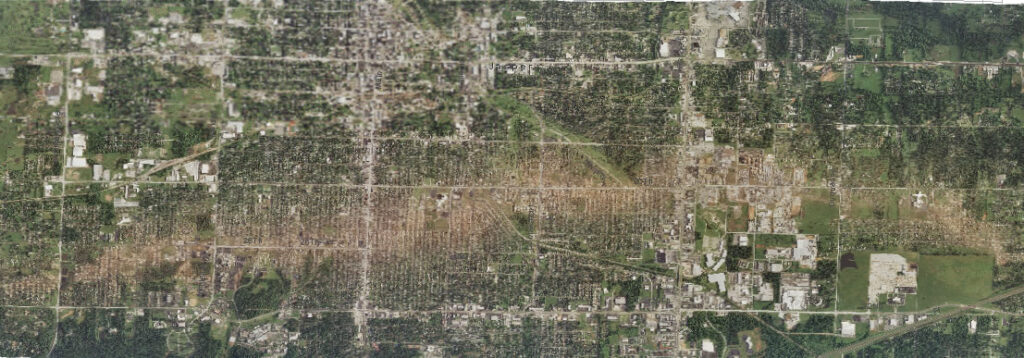
The National Oceanic and Atmospheric Administration’s (NOAA) National Centers for Environmental Information (NCEI) is responsible for providing data, products, and services that help businesses and organizations operate more efficiently and effectively. As such, these data and products need to be available in a publicly accessible and digestible format the audience are able to understand.
To aid in this effort, CSS employee owners (formerly Riverside employees) support the NCEI Industry Proving Ground User Engagement task by perform a variety of science and development activities that include
- assembling and maintaining vertically integrated, quality assured instrumental datasets that service the needs of targeted stakeholder communities and commercial sectors
- creating homogenized instrumental datasets that contain adjustments to account for the impact of non-climatic factors (e.g., changes in station location or satellite sensor) in the historical record
- developing gridded products that provide a high-resolution, temporally consistent analysis of environmental parameters (e.g., temperature, drought) from an integration of multiple data types (e.g., in situ, radar, reanalysis, satellite, socioeconomic)
- generating point-based and gridded products that depict averages (e.g., normals, typical meteorological year) and extremes (e.g., the intensity, duration, and frequency of rare events such as heat, floods, and hail) at multiple scales
- incorporating atmospheric, coastal, oceanic, geophysical, reanalysis, and socioeconomic data streams into NCEI’s suite of climate monitoring services, including the monthly reports and related web applications
- expanding the mapping content and analysis capabilities of NCEI’s climate monitoring web applications (e.g., the U.S. Climate Atlas, Drought Termination and Amelioration Tool, the National Temperature and Precipitation Maps tool) to better meet the needs of users
In addition, CSS employee owners supporting this task work directly with partners in retail, reinsurance, and architecture and engineering to make NOAA’s climate and environmental data more usable and impactful. The CSS team focuses on engaging with users to understand their needs, co-developing tools and products that help them make smarter decisions and modernize systems to better support climate resilience. The end goal is to ensure the data NCEI delivers is useful, actionable, and truly supports the people and industries they serve.

See More CSS Insights
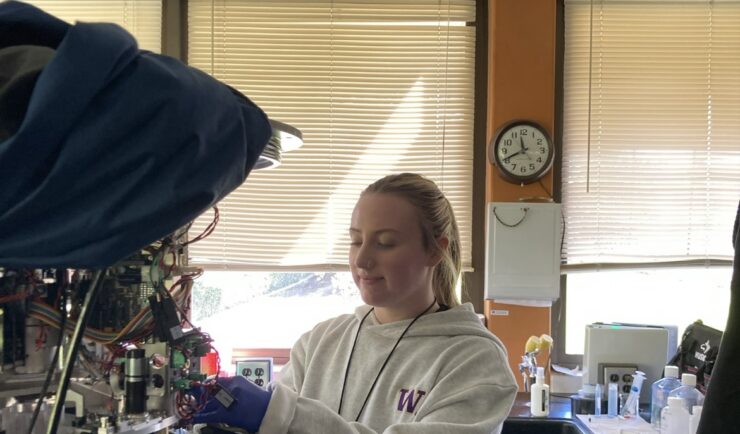
Monitoring Algal Blooms for Harmful Toxins
CSS employee owners support NOAA’s National Centers for Coastal Ocean Science (NCCOS) Harmful Algal Blooms (HAB) Sensor Development Team in their efforts to detect and monitor these harmful algal blooms in coastal waters where they are likely to occur. HAB monitoring is critical for detecting harmful toxins produced by some algae. When present in over…

New Contract. Same Great Work.
We’re pleased to announce a new small business joint venture with Paul Bechtel & Associates (PB&A), which was awarded a 5-year contract to continue supporting the U.S. Environmental Protection Agency’s (EPA) Office of Pesticide Programs. For 40 years our staff have supported EPA’s Office of Pesticide Programs in the review and evaluation of pesticide data.…
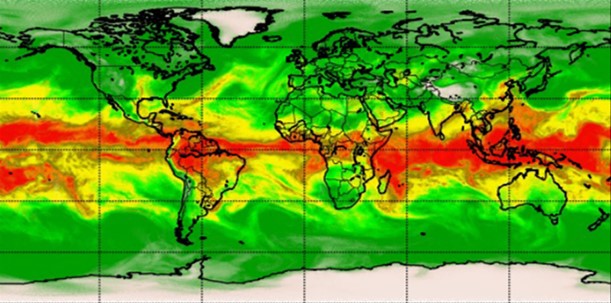
Advancing Severe Weather Predictions with Artificial Intelligence
As artificial intelligence (AI) and machine learning (ML) technologies evolve in Earth sciences, CSS employee owners (formerly Riverside staff) are growing our expertise in this field. CSS employee owners are advancing technologies for our client, NOAA’s Center for Satellite Applications and Research (STAR). Our staff have developed a framework, exploiting modern AI/ML techniques, to rapidly…