
- Success Stories
- Emergency Preparedness & Response
Webinar Support for Emergency Chemical Release Response
Our staff on contract with the Environmental Protection Agency’s (EPA) Scientific and Technical Assistance for Consequence Management Team recently provided support for the development, coordination, and moderation of a pre-Operational Testing and Evaluation of Chemical Remediation Activities webinar for EPA On-Scene Coordinators. The EPA Office of Research and Development presented on the use of provisional advisory levels (PAL). The EPA Office of Emergency Management CBRN Consequence Management and Advisory Division (CBRN CMAD) presented on the process of chemical clearance during an emergency chemical release incident. Our staff assisted the EPA team in developing the event, acted as moderator, and provided technical support. This educational and interactive webinar was critical in providing the On-Scene Coordinators with information that will support them in their efforts during an emergency chemical release event. The webinar was a big success, with approximately 50 participants, and received very positive feedback from attendees.
 EPA Office of Emergency Management gave an interactive presentation on the clearance process after the release of a chemical warfare agent. |  EPA Office of Research and Development gave an interactive presentation on the use of PALs during an emergency chemical release event. |
See More CSS Insights
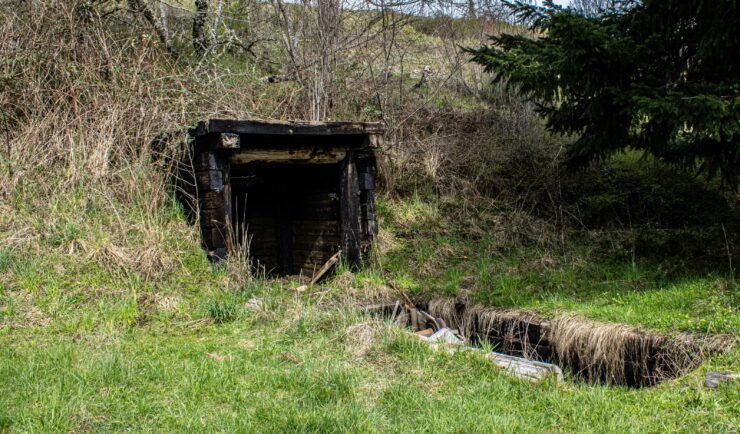
Assessing Contamination in Abandoned Mines
CSS supports the Environmental Protection Agency with assessing contamination within abandoned mines. There are thousands of abandoned mines throughout the western United States. Many of these mines are leaching heavy metals into nearby streams or have contaminated soils causing vegetation die off. CSS employee owners conduct field work to assess the extent of this contamination.…
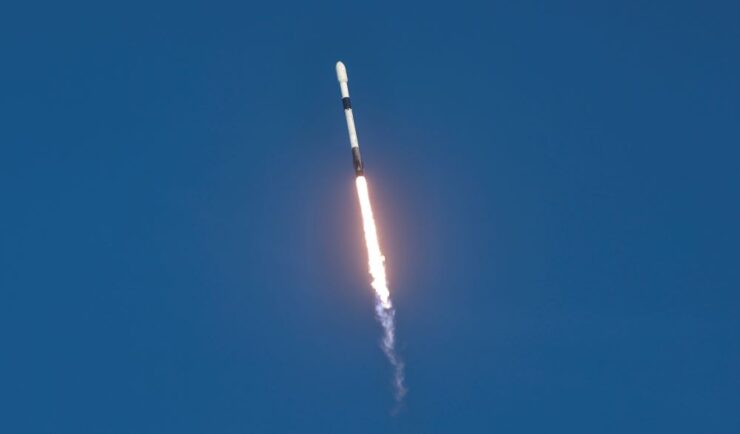
Preparing and Delivering Samples for Travel to the International Space Station
CSS employee owners on contract with NASA delivered six newly prepared Solidification Using a Baffle in Sealed Ampoules (SUBSA)—a high temperature furnace with temperature and timing control for melting samples to create different materials and alloys—samples for the NG-23 launch, which took place on September 14, 2025. On this mission, samples are being delivered for…
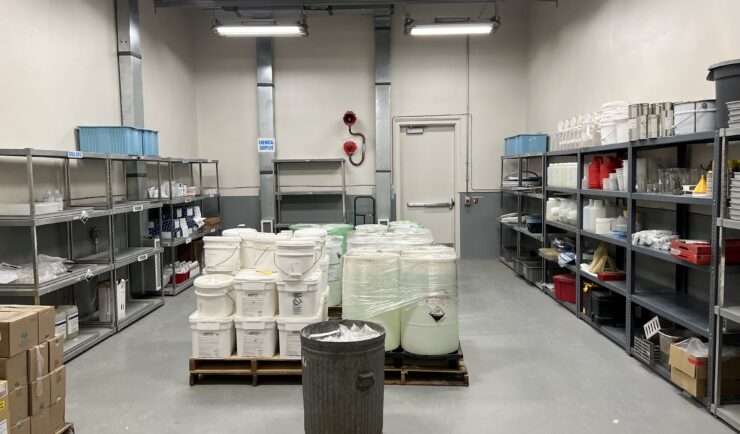
Expanding our Waste Management Contract
We’ve recently expanded our waste management contract with the Centers for Disease Control and Prevention (CDC). Our staff now support CDC in Fort Collins, Colorado. As part of this project, our employee owners ensure hazardous waste from laboratories and florescent and halogen light bulbs is managed, stored, and disposed of properly. For over 13 years…