
- Success Stories
- Safety, Health, & Environmental Compliance
Training the Next Generation of Researchers
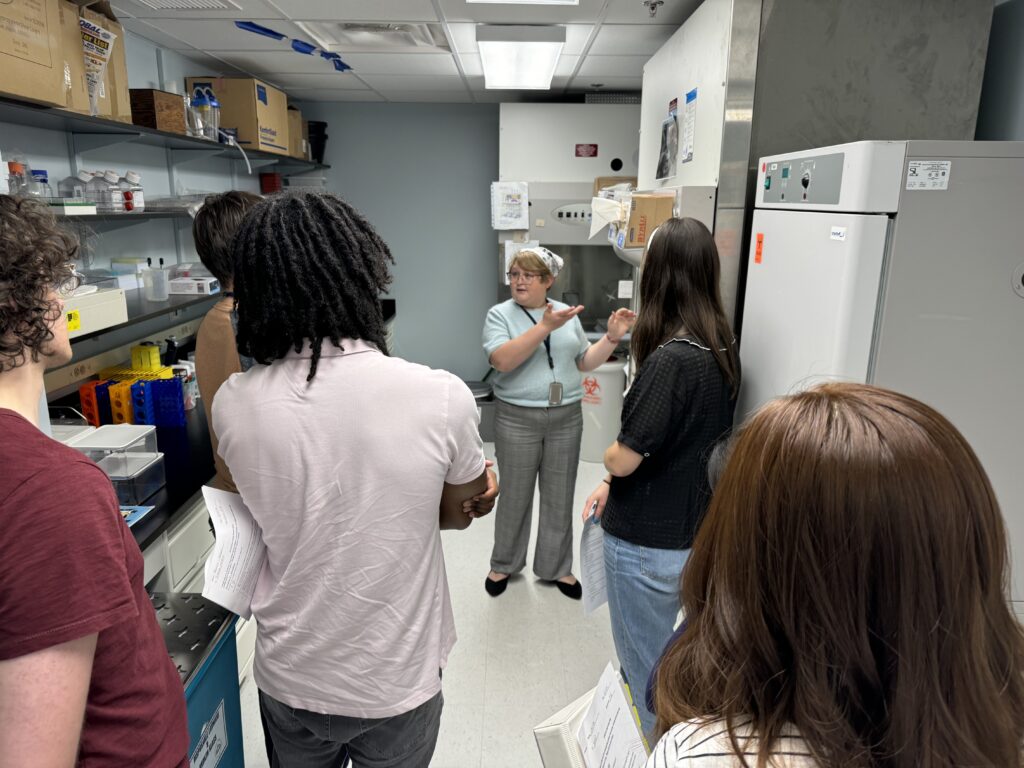
CSS staff support the National Institutes of Health (NIH) Division of Occupational Safety and Health by providing Safe Techniques Advance Research Science (STARS) training to summer interns. Following a pause during the pandemic, staff resumed training May 15, 2024. During the in-person STARS training, CSS staff cover key concepts from the pre-requisite NIH Lab Safety online training by working through two case studies: one biological hazard (salmonella typhi handling procedures), and one chemical hazard (acrylamide for gels). CSS trainers provide a show and tell while demonstrating the safety equipment in the mock lab.
We anticipate training hundreds of interns this summer.
We are proud to be training the next generation of researchers!


See More CSS Insights
New Heavily Desired High Resolution Land Cover Data for the U.S.
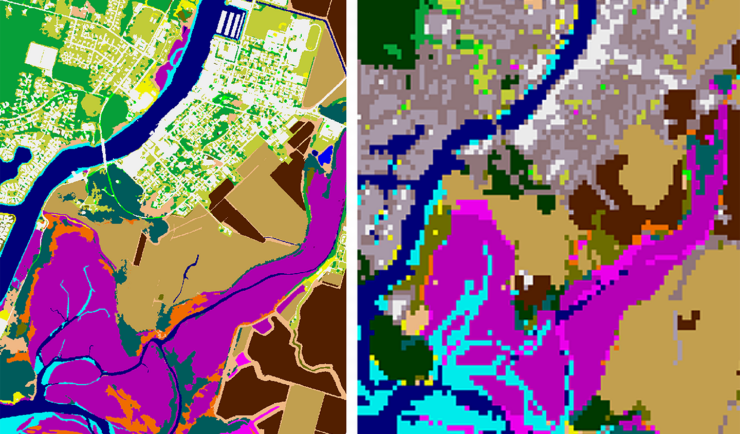
The National Oceanic and Atmospheric Administration recently announced the launch of the long desired high-resolution coastal land cover data. This highly anticipated data are available for most coastal areas of the U.S., including Alaska and the U.S. territories. CSS employee owners contributed to the release of this data set by participating in production activities and…

An Approach to Assessing Laboratory Space
CSS employee owners were part of a team of scientists at the National Institutes of Health who developed an approach to evaluating new laboratory space to determine if the space will fit operational needs. This concept, titled The BaseLINE Approach, combines traditional safety processes with additional safety and environmental factors to assess before operations begin.…

Contributing to Wind Energy Area Designations
The Bureau of Ocean Energy Management (BOEM) recently announced two Wind Energy Areas (WEAs) in the Gulf of Mexico. The WEAs are located off the coasts of Galveston, Texas, and Lake Charles, Louisiana and have the potential to power nearly three million homes. BOEM collaborated with the National Oceanic and Atmospheric Administration (NOAA) to identify…