
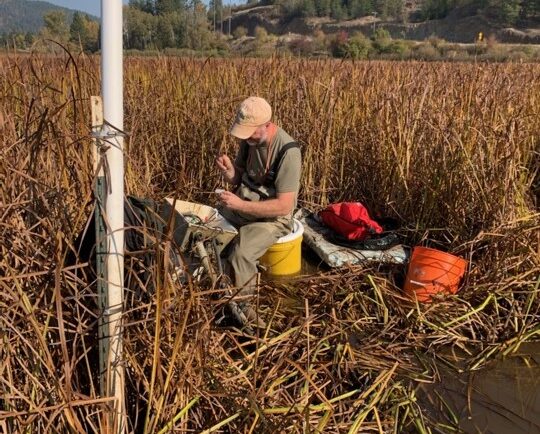
Our field crews installed/updated two environmental monitoring stations in remote locations in the Pacific Northwest. Multiple types of sensors were installed including air and soil temperature, precipitation, soil moisture and soil redox potential. These stations provide data for designing and evaluating soil remediation projects for U.S. Environmental Protection Agency’s Office of Research and Development.
Installing a monitoring station.
See More CSS Insights
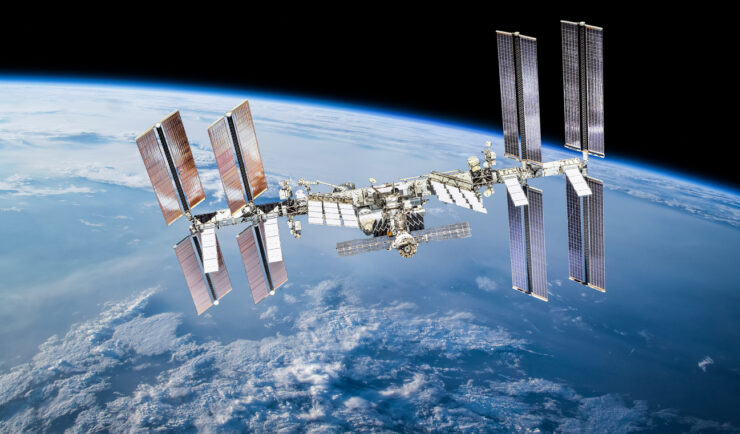
Ensuring Safety and Support for Sample Testing on the International Space Station
The International Space Station (ISS) gives scientists the opportunity to study the effects of space travel on human and plant tissues as well as understand how physical materials react during formation or exposure to a microgravity environment. CSS provides integrative expertise to NASA to support research and development and technology demonstrations conducted on the ISS,…

CSS Employee Owner Receives National Institutes of Health Award
Congratulations to CSS Employee Owner Hannah Mazurek on receiving a Core Values Award for her support to the National Institutes of Health (NIH) Office of Research and Services. The NIH recognizes Hannah “for her advocacy for use of the Lab Archives chemical inventory system, thus strengthening chemical safety and compliance.” The Core Values Award at the NIH Office…
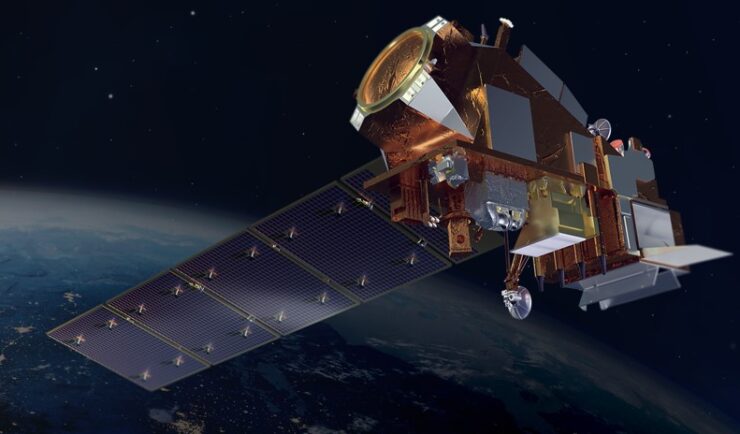
Engaging in New and Emergent Satellite Technologies
CSS employee owners (formerly Riverside employees) support the National Oceanic and Atmospheric Administration’s (NOAA) National Environmental Satellite, Data, and Information Service’s (NESDIS) Center for Satellite Applications and Research (STAR). STAR is the science arm of NESDIS, which acquires and manages the nation’s environmental satellites for NOAA. Satellite observations are critical to informing situational awareness and…