
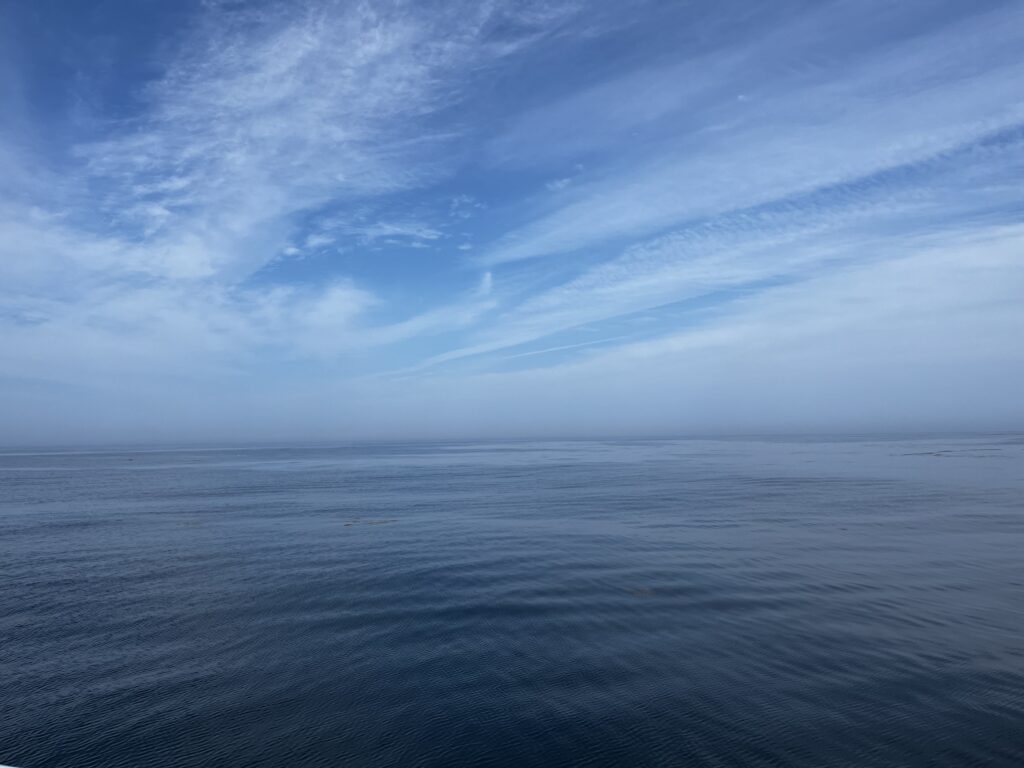
The ocean covers about 71 percent of the Earth’s surface, and life on this planet depends heavily on the ocean. We celebrate its vast being and presence each year on June 8. With CSS so heavily dedicated to Earth and environmental science, it makes sense that many CSS employee owners are deeply embedded in ocean science, from tidal ecosystems to deeper sea benthic communities. Below are a few projects our staff are involved in to assess ocean health and help make the ocean a healthier place for life on this planet.
- Restoring marsh ecosystems
- Assessing the ocean economy
- Conserving shallow coral communities affected by stony coral tissue loss disease
- Mapping, assessing, and restoring mesophotic and deep benthic communities
- Developing suitability models to inform BOEM’s selection of offshore wind energy areas
- Managing ocean data and tools to inform ocean planning and offshore renewable energy
- Forecasting, monitoring, and detecting harmful algal blooms
- Mapping and assessing seagrass and kelp and other coastal habitats
- Assessing ocean toxins and pollutants through shellfish sampling

Through several contracts with the National Oceanic and Atmospheric Administration and the U.S. Environmental Protection Agency, CSS employee owners are dedicated to protecting our ocean, its ecosystems, and life that depends on it.
See More CSS Insights

CSS Employee Owners Receive NOAA Award
NOAA’s National Environmental Satellite and Data Information Service (NESDIS) recognizes the National Centers for Environmental Information Cloud Archive Team with 2026 NESDIS Outstanding Information Technology and Engineering Team Award! This award recognizes the team’s efforts to develop and deploy the Open Information Stewardship System (OISS) and create a large language model (L-OISS) that automates the generation and testing of complex archive workflows. CSS Employee Owners…

Providing Data Products for More Effective Consumption
The National Oceanic and Atmospheric Administration’s (NOAA) National Centers for Environmental Information (NCEI) is responsible for providing data, products, and services that help businesses and organizations operate more efficiently and effectively. As such, these data and products need to be available in a publicly accessible and digestible format the audience are able to understand. To…

Over 2000 River and Stream Samples Analyzed
Every five years teams supporting U.S. Environmental Protection Agency’s National Aquatic Resource Survey—consisting of tribal, state, and federal partners—collect samples from over 2000 river and stream reaches throughout the United States. CSS analytical chemists support this effort by processing the samples and then analyzing them for various chemicals to help characterize their water quality. The…