
- Community Spotlight
- Environmental Resource Assessment & Management
Contributing to an Award-Winning Newsletter
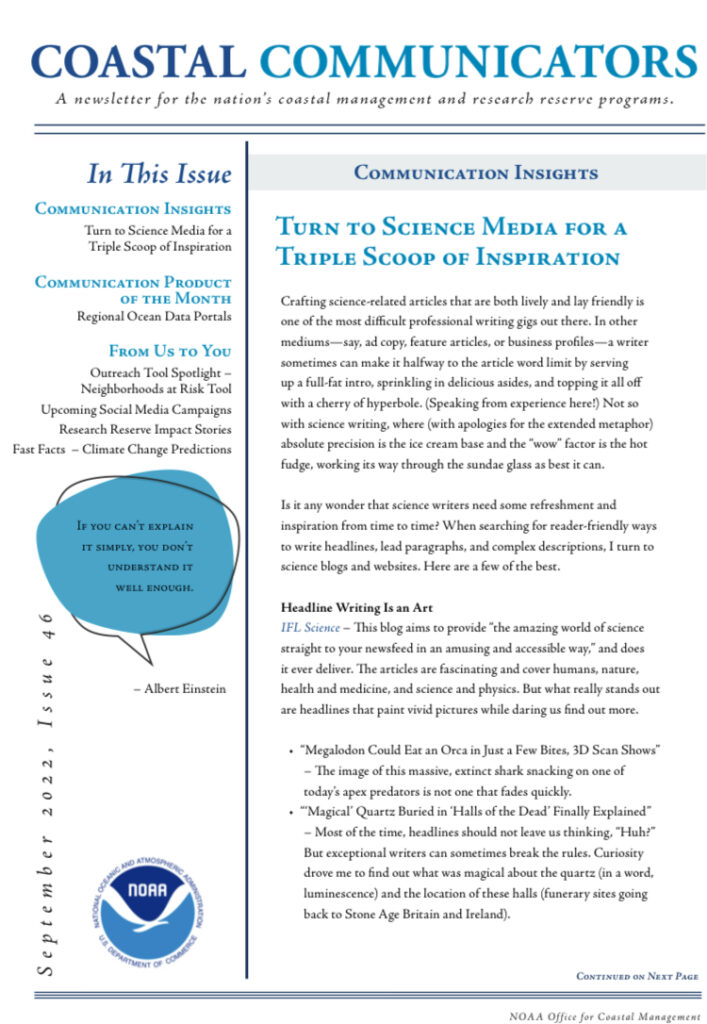
Congratulations to the communications team at the National Oceanic and Atmospheric Administration’s (NOAA) Office for Coastal Management on their award-winning publication, Coastal Communicators. As part of a subcontract with Lynker, our communication staff contribute to this monthly publication to help share tips, lessons learned, and best practices with other communicators and coastal programs who don’t have dedicated communication staff.
Our graphic designer created the captivating design, populates the layout each month, and sends the final email to users. Our senior science writer, and senior communication specialist provide articles and other content based on their observations, questions from the audience, and best practices from personal experience. This publication has received positive feedback from the coastal programs, and NOAA managers and leaders, and has expanded beyond the original intended audience. Additionally, in 2020 the publication received a South Carolina Public Relations Society of America Award!
Read the issues below with articles from our communication staff.
See More CSS Insights
Assessing Methylene Chloride Levels in Laboratories
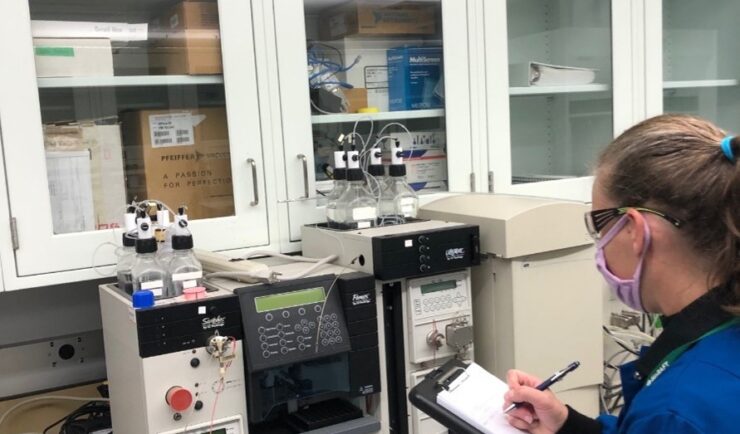
CSS employee owners supporting the University of Kentucky have started sampling campus laboratories with high use of methylene chloride to assess levels of employee exposure. This effort is in response to the Environmental Protection Agency (EPA) issuing methylene chloride regulations under Section 6(a) of the Toxic Substance Control Act in the Federal Register on May…

CSS Employee Owner Receives National Institutes of Health Award
Congratulations to CSS Employee Owner Hannah Mazurek on receiving a Core Values Award for her support to the National Institutes of Health (NIH) Office of Research and Services. The NIH recognizes Hannah “for her advocacy for use of the Lab Archives chemical inventory system, thus strengthening chemical safety and compliance.” The Core Values Award at the NIH Office…

New Video: How NOAA and Engineers Are Future-Proofing America’s Infrastructure
CSS team members supporting NOAA’s National Centers for Environmental Information (NCEI) industry initiative are working with the architecture and engineering, insurance and reinsurance, and retail sectors to co-develop environmental data tools that are accessible and actionable, helping industries and communities build weather resilience. A new video showcases how NOAA data products, and this initiative, are equipping professionals to design…